The Mosaic Journal
Plain-language genomics from the team behind the report: methylation, histamine, thyroid, sleep, detox, hormones, and the rest of the 108. Browse all insights
Latest from the Journal
Mosaic Biodata Launches Clara, Clinical Decision Support That Reads Every Report Together
The last decade solved collecting a patient’s data. Clara solves reading it together: clinician-facing decision support AI that integrates every interpreted report into one connected picture, with the clinician in command.
Read the post
Every post in the Journal (35).
Newest first. Each post connects back to the insight or area of your report it is about.
Mosaic Biodata Revives and Expands the Apeiron Academy as the Mosaic Biodata Institute
New Epigenetics Coaching Certification launches with single sign-on across the Mosaic genomics platform and the Institute.…
Welcome to the Mosaic Journal
What this section is, who writes it, and how to use the posts alongside your Genomic Lifestyle Optimization Report.…
Folate vs. Folic Acid: They're Not the Same Thing (Here's Why It Matters)
Folate and folic acid aren't the same thing. One is the natural form of vitamin B9 from food; the other is synthetic and has to be converted before your body ca…

Your Detox Genes, Explained: Mold, Metals, and Why It's Different for Everyone
Your body runs real detoxification systems in two phases, and how well they clear mold, heavy metals, and pollution is partly genetic. That is why the same expo…
Iron Absorption: How Your Genes Decide Whether You Need More or Less
Iron needs a careful balance: too little brings fatigue and brain fog, too much can damage organs. Your genetics influence which end of that spectrum you lean t…

Magnesium Runs 300+ Enzymes in Your Body: Here's How Genetics Sets Your Need
Magnesium powers over 300 enzymatic reactions, yet it is one of the most common deficiencies. Your genetics influence how much you actually need and how well yo…
Beyond Total Testosterone: SHBG, Free T, and the Genetics Most Labs Miss
Total testosterone only tells part of the story. What matters just as much is how much is actually available to your cells, and that depends on SHBG, a binding …

The Science of Sugar Cravings: Dopamine, Taste Receptors, and Your DNA
If your sugar cravings feel harder to manage than everyone else, your genetics may be part of the reason. How intensely you taste sweetness and how your brain r…

Genetic Testing for Longevity: What Science Actually Says
Can your genes tell you how long you will live? Not exactly. Genetics account for roughly 20 to 30% of lifespan variation. What testing can do is reveal your sp…
The Genetics of Coffee: How Fast Does Your Body Actually Clear Caffeine?
Why can some people drink espresso after dinner and sleep fine while others are wired from a noon coffee? It is genetic. The CYP1A2 enzyme sets how fast you cle…

Why Some People Thrive on Keto While Others Don't
Keto works brilliantly for some people and terribly for others, and your genes help explain why. How you process fat, handle carbohydrates, and register fullnes…
What CLIA Certification Means (and Why We Won't Work Without It)
CLIA certification means a lab has met federal quality standards for accuracy and reliability, the same standard required for the lab that runs your blood work.…
Methylation 101: The Process Running Behind Everything Your Body Does
Methylation is a simple chemical reaction (attaching a methyl group to another molecule) that your body runs billions of times a day. It quietly controls DNA re…
Understanding Your Heart Health Risk: Beyond Family History
Family history matters for heart health, but it is a blunt instrument that blends genes with shared lifestyle and misses variants your parents never expressed. …
How Your Body Processes Stress: The Genetics of Cortisol
Cortisol is your primary stress hormone, and your genetics influence both how much you produce and how sensitive your cells are to it. Those are two separate th…
The Science Behind Personalized Nutrition
Nutrition advice has long been built on population averages, but every step of how you process food runs through enzymes coded by your genes. Nutrigenomics is w…
Vitamin D Isn't One-Size-Fits-All: How Your Genes Set Your Ideal Level
Two people can take the same vitamin D dose and end up with completely different results. Your genes shape how you produce, convert, transport, and respond to v…

The Science Behind Personalized Fitness: Why One Workout Doesn't Fit All
Why do some people build muscle effortlessly while others struggle, or recover in a day instead of three? A lot of the answer is in your DNA: muscle fiber type,…
What Whole Genome Sequencing Tells You That Other DNA Tests Don't
Most consumer DNA tests read a few hundred thousand pre-selected markers. Whole genome sequencing reads all 3 billion base pairs, at 30x depth. That difference …

3 Ways Your Histamine Pathways Affect Your Daily Life
Histamine is a signaling molecule your body makes on purpose, and it does far more than trigger sneezing. Your genes shape how you produce, clear, and respond t…
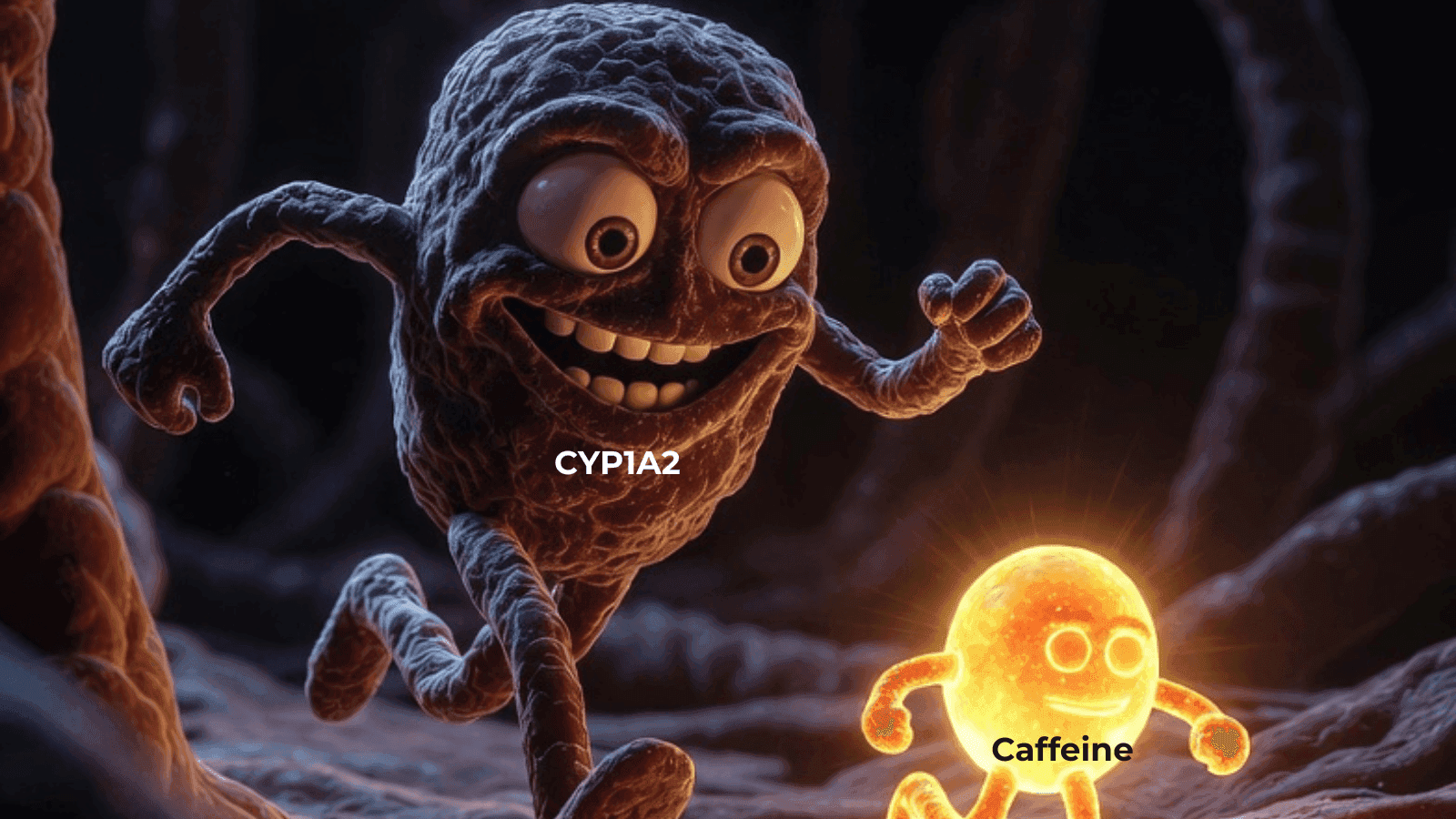
What Your Genes Say About Caffeine, Alcohol, and Other Substances
Why does caffeine wreck your sleep but not your friend, or two drinks hit you harder than someone else? It is largely genetic. The same enzymes that clear caffe…

MTHFR: The Gene 40% of People Have and What It Actually Does
MTHFR is an enzyme that converts folic acid into the active folate your body actually uses. Roughly 40% of people carry a variant that slows that conversion, wh…

What Your DNA Can (and Can't) Tell You About Your Health
Genetic testing is powerful, but it is not magic. Your DNA can reveal how you metabolize nutrients and medications and your inherited risks, but it cannot diagn…

What Is 30x Coverage and Why Does It Matter?
30x coverage means each position in your genome is read an average of 30 times, so the analysis can tell real variants from sequencing errors. It is the clinica…
Are You a Night Owl or Early Bird? Your DNA Knows
Whether you wake at 5 AM ready to go or do not feel human until noon is largely set by your genes. Clock genes like PER2, PER3, CLOCK, and CRY1 shape your chron…

How We Protect Your Genetic Data (And Why We'll Never Sell It)
Your DNA is the most personal data you have, and it cannot be reset like a password. We will never sell it, we encrypt it in transit and at rest on PHI-safe inf…
Why Your Supplements Might Not Be Working
If your supplements do nothing, the problem may not be the brand. Your genes shape how you absorb, transport, and use nutrients, so the same supplement can prod…

Your Genes Aren't Your Destiny: Understanding Epigenetics
Your genes influence your health risks, but that influence is rarely absolute. Epigenetics is the system that decides which genes get switched on or off, and it…

Understanding Pharmacogenomics: Why Medications Affect People Differently
Pharmacogenomics is the study of how your genes affect drug response. It explains why a medication that works perfectly for someone else might do nothing for yo…

Whole Genome Sequencing vs. 23andMe: What's the Difference?
Consumer DNA tests like 23andMe read about 0.02% of your genome, roughly 600,000 pre-selected markers. Whole genome sequencing reads all 3.2 billion base pairs …

Why 'Eat Less, Move More' Doesn't Work for Everyone
"Eat less, move more" is technically correct but practically incomplete. Your metabolic rate, how you partition nutrients, your satiety signals, and your respon…
Unlocking the Secrets of CYP1A2 Caffeine Metabolism: Why Your Coffee Hits Different
Whether you can drink espresso all day or get jittery from one cup comes down to CYP1A2, the liver enzyme that metabolizes over 95% of your caffeine. It also pr…
Take Control of Your Health at the Deepest Level
Whole-genome sequencing turns your DNA into a personalized guide for nutrition, exercise, sleep, and daily habits, far beyond a basic test. Mosaic delivers it t…
Maximizing Insights with Genetic + Lifestyle Bundles: Unlock the Benefits of WGS
Whole genome sequencing reads your entire DNA, not just a handful of markers, and pairing it with lifestyle guidance is what makes it actionable. A clear exampl…
See what your DNA says.
One kit. Every base of your genome at 30× depth. Yours for life.