
Unlocking the Secrets of CYP1A2 Caffeine Metabolism: Why Your Coffee Hits Different
Whether you can drink espresso all day or get jittery from one cup comes down to CYP1A2, the liver enzyme that metabolizes over 95% of your caffeine. It also processes medications, hormones, and toxins, and your genetics set how fast it runs.
Part of Metabolism and Digestion, one of the nine areas in your Genomic Lifestyle Optimization Report.

Whether you can chug espresso all day without a hitch or get jittery from a single cup comes down to CYP1A2, a liver enzyme that metabolizes over 95% of the caffeine you consume. It also breaks down medications, hormones, and environmental toxins, and your genetics decide how fast it runs.
Understanding CYP1A2: the enzyme powerhouse
CYP1A2 stands for Cytochrome P450 1A2, part of a massive family of enzymes (over 50 in humans) that act like your body's detox squad. These enzymes live mostly in the liver, where they transform chemicals into forms that are easier to flush out. Think of CYP1A2 as a molecular chef: it takes raw ingredients (like caffeine) and cooks them into metabolites your body can handle.
Location and expression
CYP1A2 is primarily in the liver but can also show up in places like the gut or lungs. About 40% of its activity varies from person to person due to genetics, and caffeine metabolism itself can fluctuate by 60%.
What it does beyond caffeine
CYP1A2 metabolizes up to 36% of common medications, including antidepressants like duloxetine, heart medications like propranolol, and even hormones like estrogen. It's also key in processing environmental toxins, like those from grilled meats or cigarette smoke.
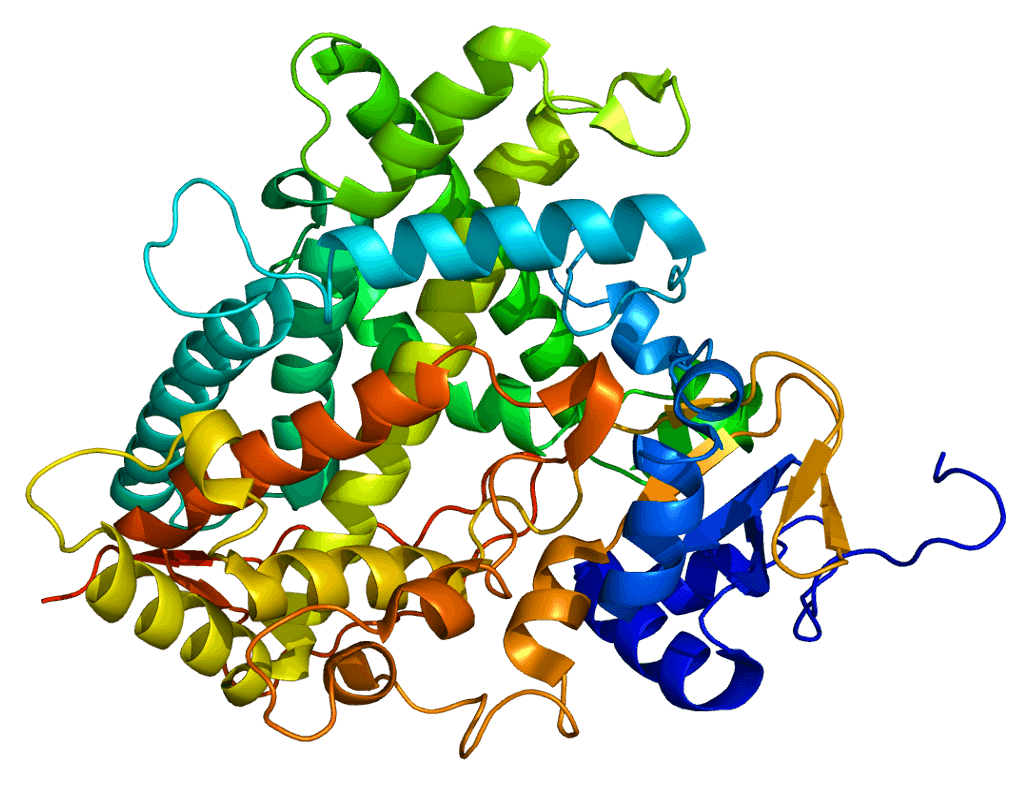
That intricate shape is what lets it bind to molecules like a lock and key.
How CYP1A2 handles caffeine metabolism
Caffeine is a sneaky stimulant. It's absorbed fast (peak blood levels within 30 to 60 minutes) but lingers based on how quickly your body breaks it down. CYP1A2 is responsible for metabolizing over 95% of the caffeine in your system, converting it into paraxanthine (which keeps you alert), theobromine (a mood booster), and theophylline (a bronchodilator) before they're excreted.
The process
Caffeine enters the liver, where CYP1A2 oxidizes it via a process called N-demethylation. Slow this down, and caffeine hangs around longer, amplifying effects like heart rate spikes or anxiety.
Factors that influence metabolism
Smoking revs up CYP1A2 (smokers clear caffeine faster), while pregnancy or certain medications slow it. Even your diet plays a role; cruciferous vegetables like broccoli can induce it.
Your unique genetic blueprint
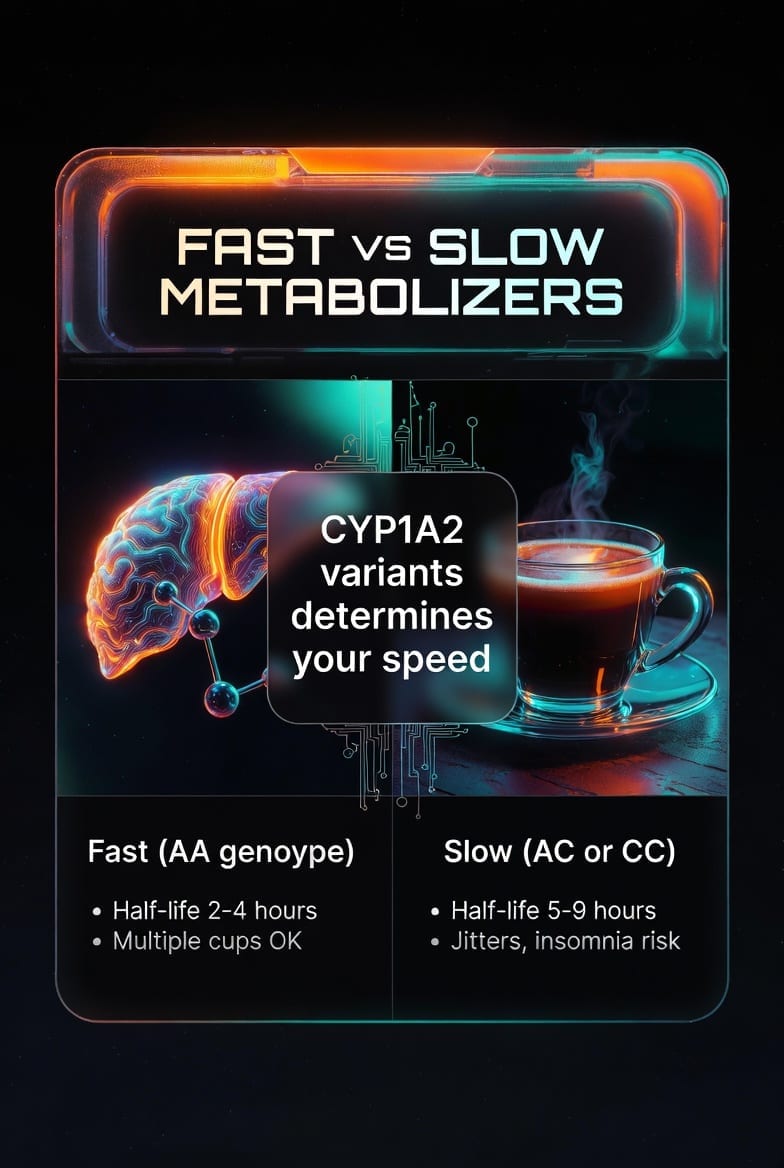
Your DNA dictates whether you're a "fast" or "slow" caffeine metabolizer, thanks to polymorphisms (tiny gene tweaks) in CYP1A2. The most famous is rs762551 (also called -163C>A or CYP1A2*1F).
The variants explained
- AA genotype (fast metabolizers): the common "wild type" version. You clear caffeine quickly, with a half-life around 2 to 4 hours. Coffee gives a short boost, and you might need more to feel it.
- AC or CC genotype (slow metabolizers): the C allele slows things down, with a half-life up to 9 hours. Caffeine lingers, potentially causing jitters, insomnia, or higher blood pressure risk. About 50% of people have at least one C allele.
Other variants like CYP1A2*1K (found more in some populations) also dial down activity. Genome-wide studies even link nearby genes like AHR (which regulates CYP1A2) to how much coffee you crave; people with certain variants drink about 40mg more caffeine daily.
Fascinating facts about CYP1A2
Health links
Slow metabolizers who drink lots of coffee (3+ cups a day) face higher risks for kidney issues, hypertension, or even heart attacks in some studies. On the flip side, fast metabolizers might get protective benefits from coffee against diseases like Parkinson's or type 2 diabetes.
Global differences
The slow-metabolizing C allele is more common in South Asians and Africans. Ethiopians and Swedes show varying inducibility based on haplotypes.
Beyond coffee
CYP1A2 also processes melatonin (the sleep hormone) and theophylline (an asthma medication). Smokers with the A allele metabolize some medications faster, which could mean needing higher doses.
Evolutionary angle
Why the variation? It might stem from ancient diets; faster metabolizers could handle more plant toxins in diverse environments.
What this means for you
For fast metabolizers
Go ahead and enjoy multiple cups; your body handles it like a pro. But watch for tolerance; you might not feel the full benefits.
For slow metabolizers
Stick to 1 to 2 cups early in the day. Switch to decaf or tea (lower caffeine) to avoid side effects like anxiety or disrupted sleep.
General tips
Track your response with a journal or app. Factors like age (activity drops over time) or grapefruit juice (which inhibits CYP1A2) can shift things. This isn't medical advice; genetics are just one piece, so talk to a doctor if caffeine is affecting how you feel.
The bottom line
Whether you're a speedy sipper or a lingering-latte lover, knowing your CYP1A2 status turns your daily coffee from guesswork into something you can actually optimize. Your caffeine metabolism insight sits in the Metabolism & Digestion section of your Mosaic report.
Want to see your own? The metabolism and digestion area of your report reads the genes behind this post. Practitioner? Take the free Institute lesson on Nutrigenomics: Food as an Epigenetic Tool.