
This is what you get.
Real pages from a real Genomic Lifestyle Optimization Report: 108 insights, color-coded, written for daily decisions.
Real pages from a real report.
Below: actual pages from a delivered Lifestyle Report, the same PDF that lands in your account when your sequencing results are ready. Same design. Same color markers. Same plain-language recommendations written for daily use.

The cover
100+ pages. 9 areas. 108 insights, every one set by your DNA.
Inside, every area covers a real system Mosaic sequences, and every reading is tuned to your specific variants. Nothing in this document is generic. The example here is a real delivered report; yours will look the same in design, with your own numbers.
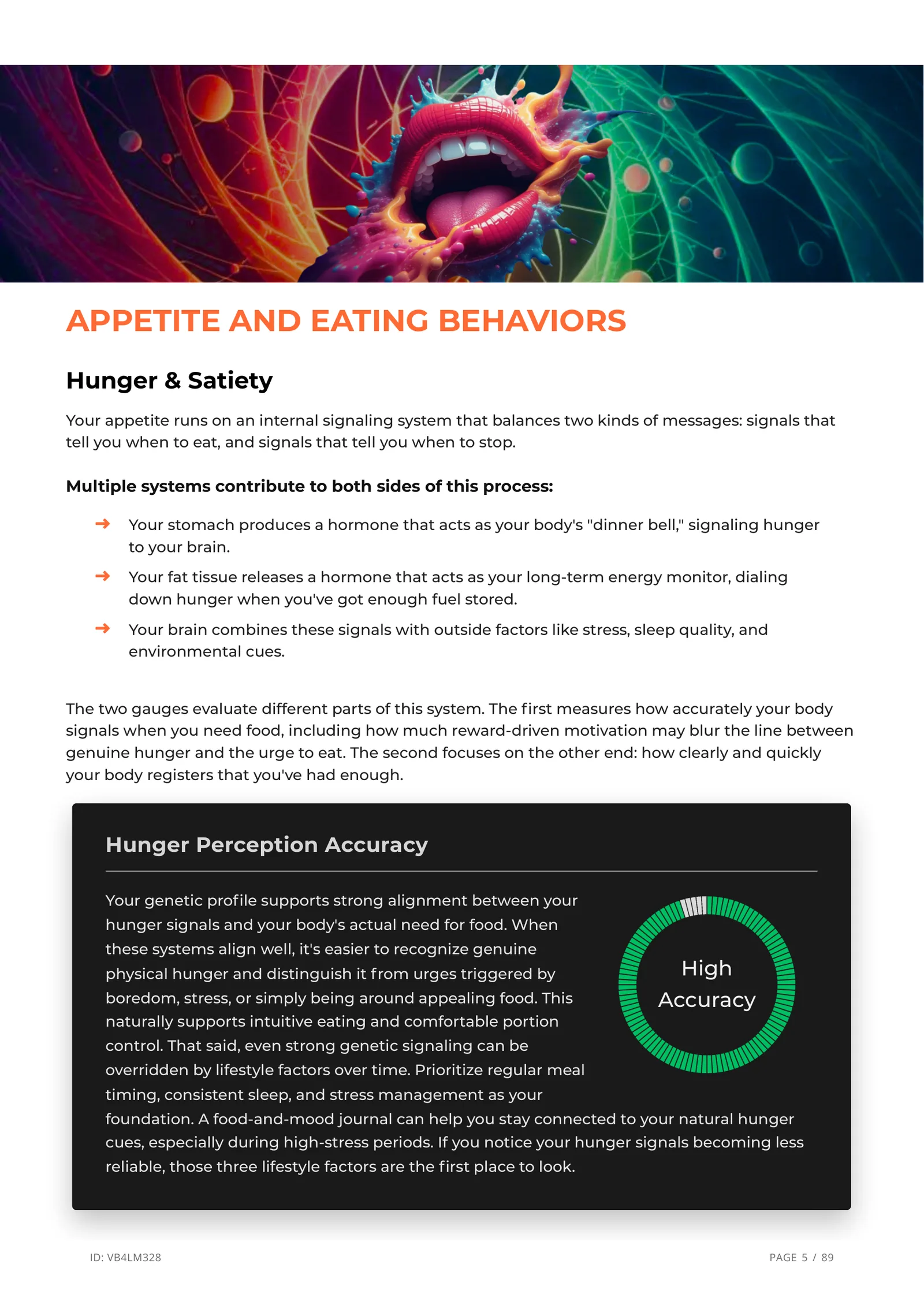
Area opener

Single-insight page
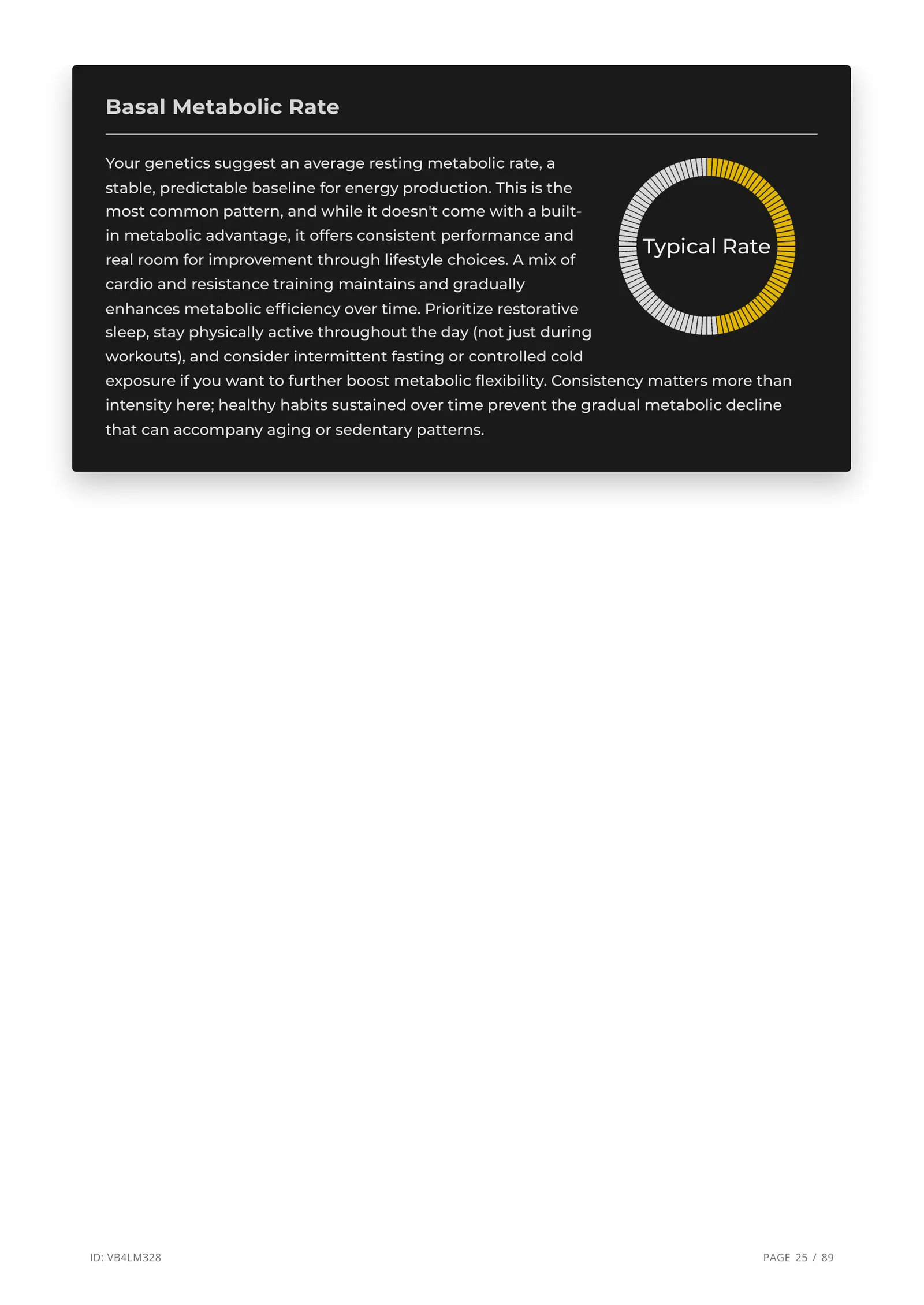
Typical-tier insight
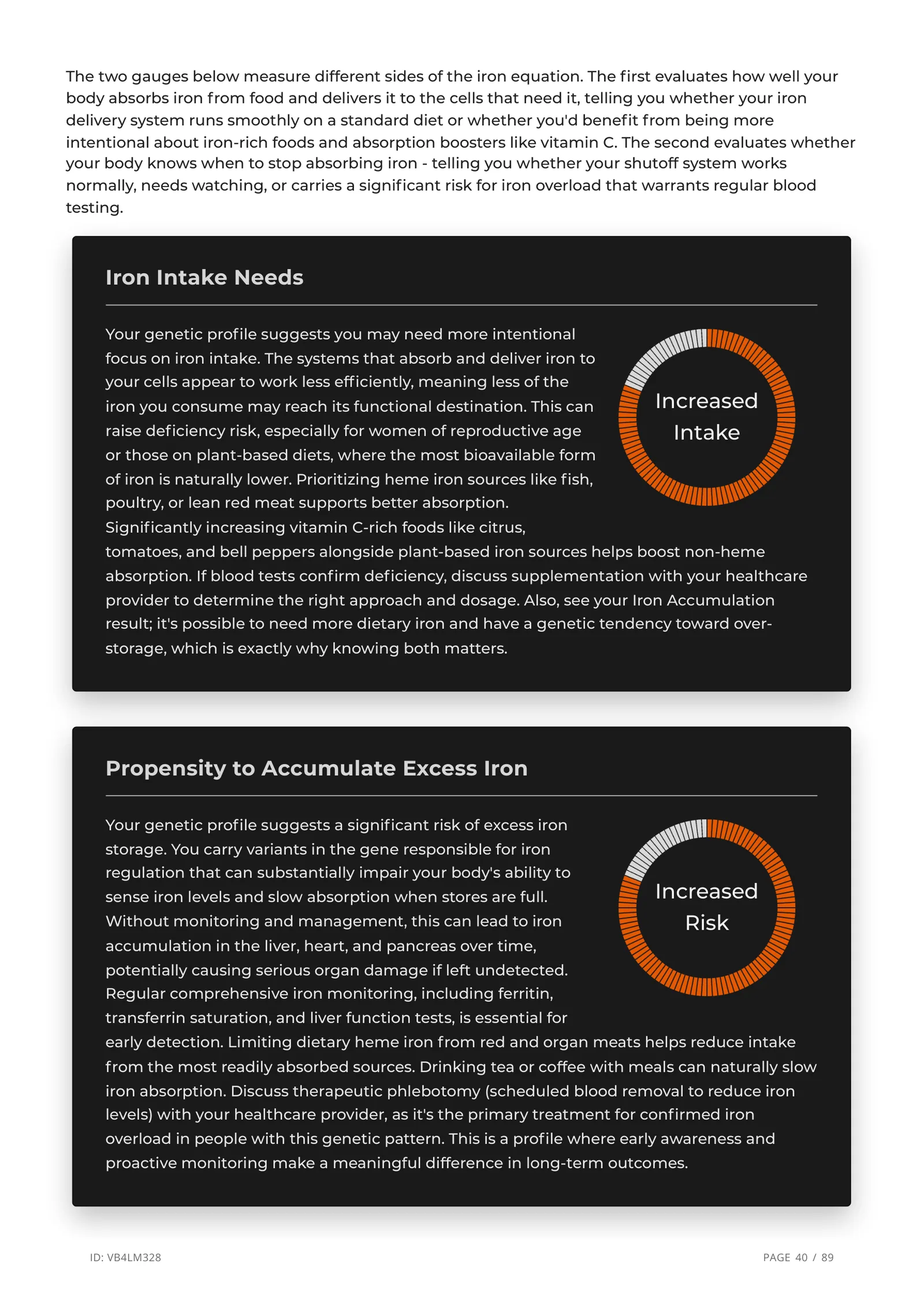
Two insights per page
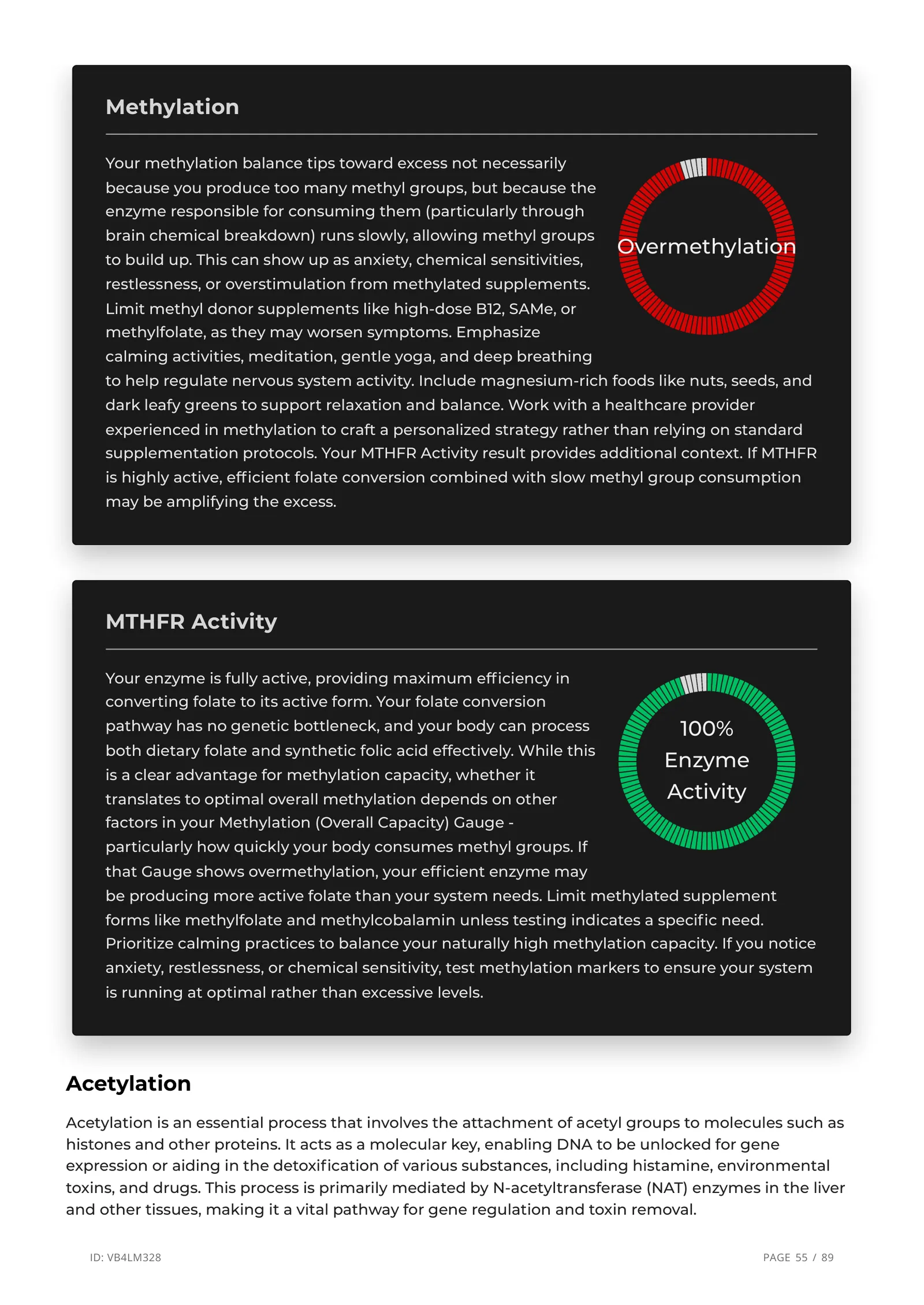
Red vs. green, instantly
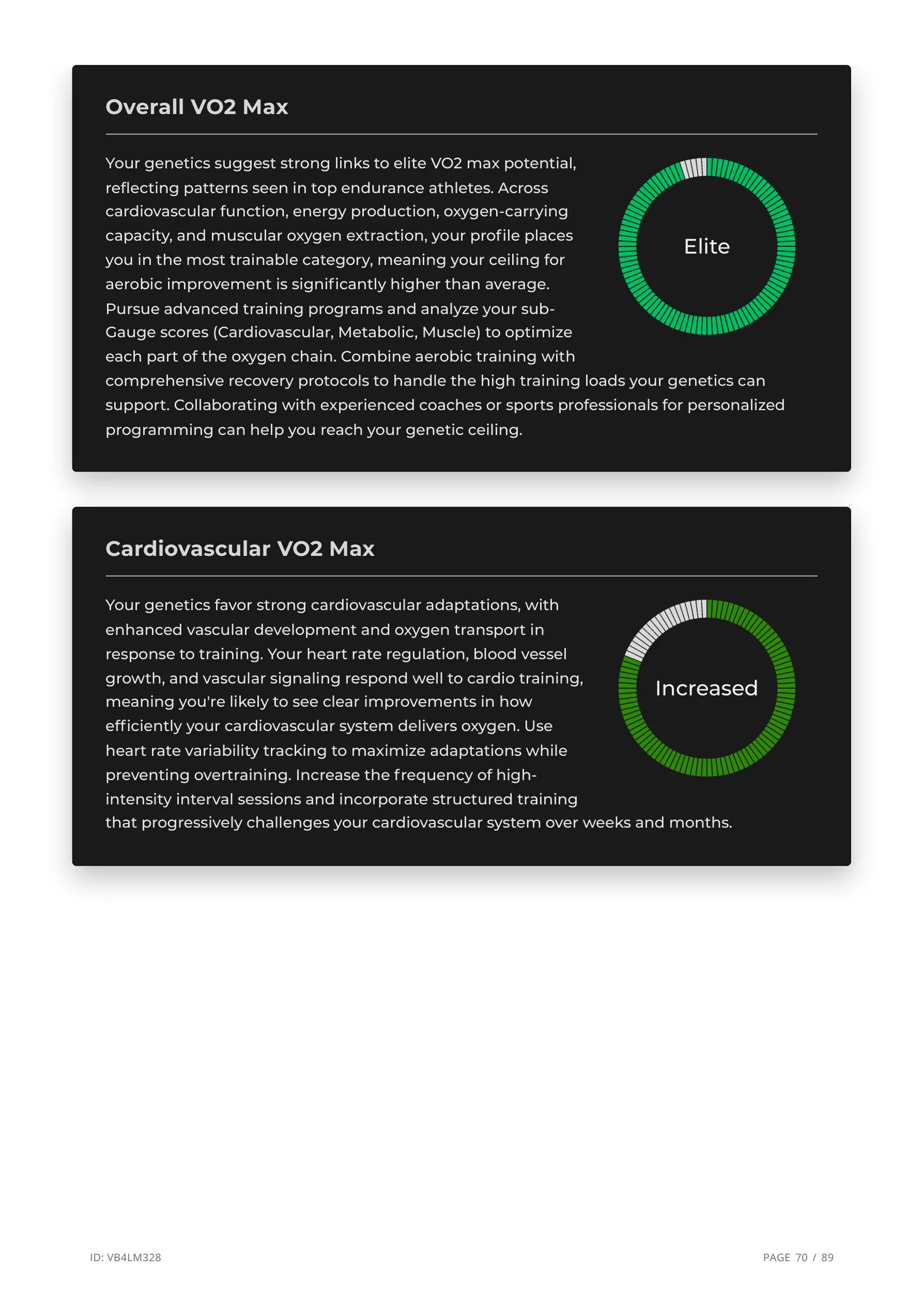
Favorable-tier insight
6 of 100+ pages shown. Every report is rendered from your own sequencing data.
Every area follows the same pattern.
Once you know the rhythm, you can navigate any of the nine areas in seconds. The dark cards are your genetics; everything else is the background.
Step 1
Find the area cover
Each of the nine areas opens with a bold title and image. Jump to the one you care about; you do not have to read cover to cover.
Step 2
Read the background
White pages explain the science in plain language: what the trait is, why it matters, and how genes shape it. This part applies to everyone.
Step 3
Focus on the dark cards
Dark cards are your genetics. Each one has the insight name, a color marker showing where you fall, and a plain-language explanation of what your variants tend to do.
Step 4
Act on the recommendation
Every dark card closes with a practical next step: what to eat, when to time it, which cofactors to support. Work them on your own or with a practitioner.
What the colors mean.

Green: favorable
Your genetics work in your favor here. Labels like High Accuracy, Beneficial, or Low Need.

Teal: informational
A neutral finding worth knowing. Labels like Typical Response or Higher Intake.

Orange: typical to moderate
A common finding in the typical range. Labels like Moderate Sensitivity or Standard Levels.

Red: action recommended
A finding that may benefit from a change. Labels like Low Efficiency. Genes set tendencies, not certainties, and daily choices move most of these.
The marker shows a tendency, not a destiny. Even red findings can usually be addressed through food, timing, and lifestyle, and the report is most useful read with a practitioner who can place it beside the rest of your health picture.
Each insight tells a story you can act on.
Three of 108, exactly as they appear in your report: color marker, plain-language explanation, practical next step.
- Low Activity
Hormones
DIO2 Activity
Gene: DIO2 • Result: Low Activity
Your genetics suggest reduced activity of the enzyme responsible for converting thyroid hormone into its active form, specifically in your brain and key tissues. This can show up as brain fog, low mood, difficulty concentrating, or cognitive sluggishness, even when standard blood tests seem normal. Those tests measure your bloodstream, not what is happening inside your brain.
What to do with this: Consider comprehensive thyroid testing, including T3 levels, to assess brain-specific thyroid availability. Selenium-rich foods like Brazil nuts directly support this enzyme, and adequate zinc also helps. Work with providers who understand tissue-specific thyroid conversion, a nuance standard thyroid care often misses. Stress management and quality sleep matter for this profile too, since both affect local thyroid conversion in the brain.
- Increased Intake
Micronutrients and Strategic Supplementation
Vitamin C Intake Needs
Gene: SLC23A1 • Result: Increased Intake
Your vitamin C transporters carry variants that reduce how efficiently you absorb and retain this vitamin, meaning typical dietary intake may fall short, especially during stress or periods of heightened demand.
What to do with this: Aim for a higher daily intake through a combination of food and, if needed, a supplement. Include vitamin C-rich foods like bell peppers, strawberries, and citrus several times a day for sustained levels. Track immune function and energy as signs of whether your intake is meeting your needs.
- High Impact
Toxin Sensitivities
Heavy Metal Health Impact
Genes: GSTM1, GSTP1 • Result: High Impact
Your genetic profile suggests your tissues are more vulnerable to the damage heavy metal exposure can cause. The systems that protect your brain, cardiovascular system, and kidneys from metal-induced harm appear to have reduced capacity, so even moderate metal levels may do more damage over time. Exposure reduction and monitoring matter more for you.
What to do with this: Avoiding high-risk metal sources is a priority: old plumbing, lead-contaminated environments, and high-mercury fish. Filtering your drinking water is especially worthwhile. Selenium-rich foods and antioxidant-rich fruits and vegetables support your protective systems, and glutathione-supporting supplements like N-acetylcysteine may suit your profile. Periodic testing for heavy metal levels helps you stay ahead of accumulation; if levels are elevated, talk to a healthcare professional experienced in heavy metal management. Read your Processing Speed result alongside this one. It tells you how long metals spend in your system.
See all six
- Increased Risk
Toxin Sensitivities
Gluten-Related Immune Response Risk
Gene: HLA-DQ2 / HLA-DQ8 • Result: Increased Risk
Your genetics suggest an elevated predisposition for gluten-related immune responses. You carry immune-system variants that may increase the likelihood of your body treating gluten proteins as a threat, though having these variants does not guarantee a sensitivity will develop.
What to do with this: Support gut health with probiotic-rich foods, reduce highly processed foods, and pay attention to how you feel after gluten-heavy meals. If you have persistent digestive issues, unexplained fatigue, or other systemic symptoms, discuss gluten-specific testing with your healthcare provider.
- Moderate Impact
Macronutrients and Metabolic Optimization
Impact of Dairy Fat on Weight
Gene: APOA2 • Result: Moderate Impact
Your genetics suggest dairy fat may be stored more readily than burned. Your profile points toward less efficient processing of saturated fats from dairy, meaning full-fat options like butter, cream, and rich cheeses are more likely to contribute to weight gain over time.
What to do with this: Choosing lower-fat or fat-free dairy, watching portion sizes with cheese and cream-based dishes, and pairing dairy with fiber-rich foods are straightforward ways to keep dairy's nutritional benefits while managing its impact on your weight.
- Typical Function
Toxin Sensitivities
Histamine Receptor Function
Genes: HRH1, HNMT • Result: Typical Function
The feedback mechanism that monitors histamine levels and tells your body to ease off when there is enough in circulation is working well. Histamine signals come through at the right volume and get dialed back when they should.
What to do with this: Including vitamin A-rich foods like carrots, sweet potatoes, and leafy greens supports overall immune function. Tracking your seasonal allergy patterns helps you spot your most reactive periods and time any support accordingly. Adequate sleep, stress management, and good nutrition keep this feedback system working well.
Six of 108 insights in your full report. Each one is set by your own variants, not a template.
Order your kitNine areas. 108 insights.
- 01Appetite and Eating Behaviors5 insights
- 02Metabolism and Digestion11 insights
- 03Macronutrients and Metabolic Optimization10 insights
- 04Micronutrients and Strategic Supplementation22 insights
- 05Sleep Optimization and Circadian Health9 insights
- 06Detoxification Pathways9 insights
- 07Toxin Sensitivities13 insights
- 08Athletic Performance17 insights
- 09Hormones12 insights
Get yours.
Order a kit and your report lands in 15 to 20 days. Already have your data? The same report is $199 on an upload.