
What Your Genes Say About Caffeine, Alcohol, and Other Substances
Why does caffeine wreck your sleep but not your friend, or two drinks hit you harder than someone else? It is largely genetic. The same enzymes that clear caffeine, alcohol, nicotine, and more vary from person to person, with real health implications.
Part of Metabolism and Digestion, one of the nine areas in your Genomic Lifestyle Optimization Report.
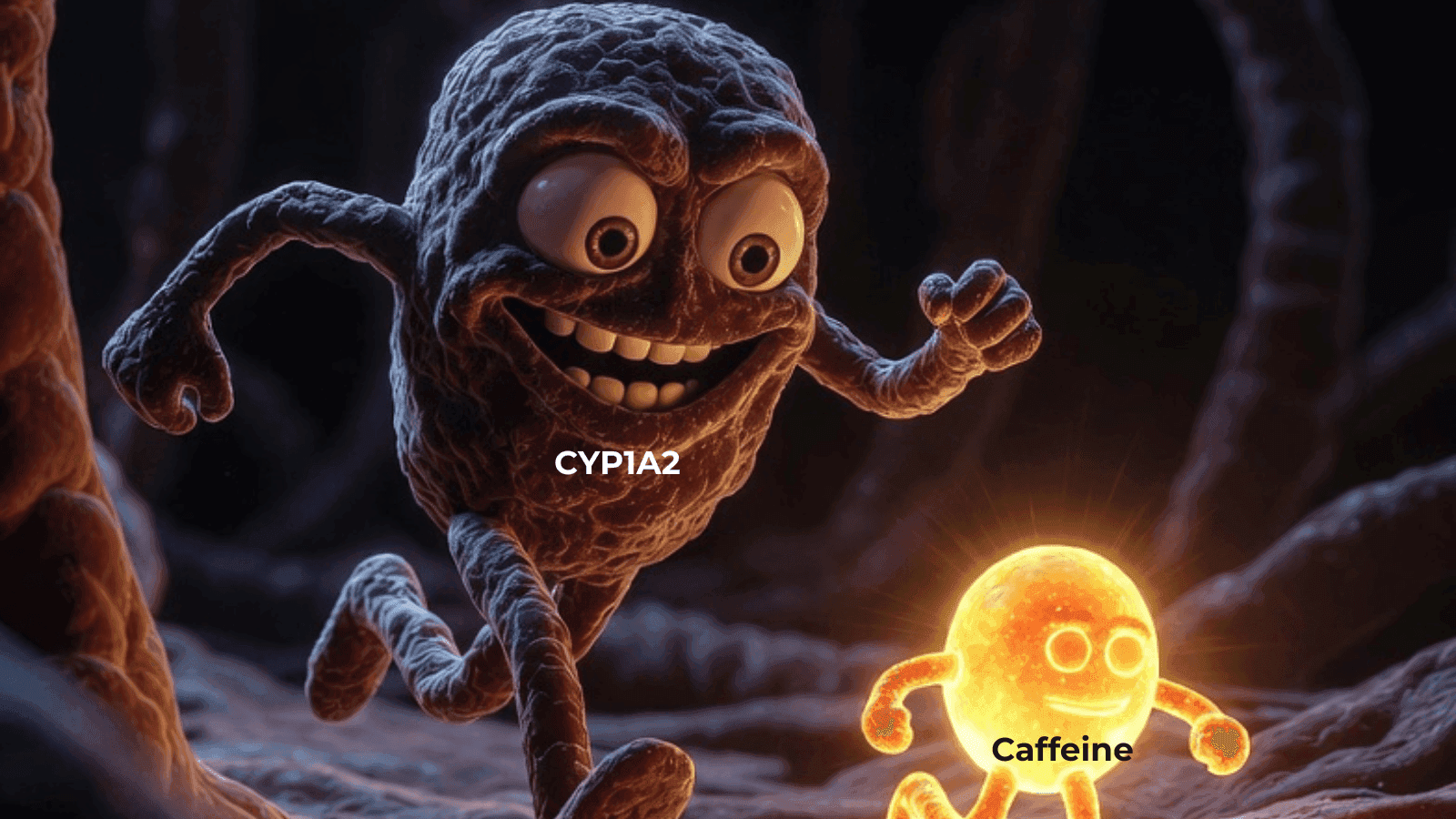
The reason caffeine wrecks your sleep but not your friend's, or two drinks hit you harder than the next person, isn't tolerance. It's largely genetic. The enzymes that clear caffeine, alcohol, nicotine, and other substances vary from person to person, and those differences carry real, sometimes opposite, health implications.
Caffeine: the CYP1A2 story
The CYP1A2 gene controls how fast you metabolize caffeine. People with the "fast metabolizer" variant clear caffeine from their system quickly. They can have coffee in the evening without sleep disruption. Slow metabolizers process caffeine much more slowly; that afternoon cup might still be affecting them at bedtime.
This isn't just about sleep. Research suggests slow caffeine metabolizers may have increased cardiovascular risk from high coffee consumption, while fast metabolizers might actually get protective benefits. Same substance, different genetic response, opposite health implications.
Alcohol: multiple genes at play
Alcohol metabolism involves two main steps, each controlled by different genes. ADH (alcohol dehydrogenase) converts alcohol to acetaldehyde, a toxic compound. ALDH (aldehyde dehydrogenase) then breaks down the acetaldehyde.
If you have fast ADH and slow ALDH, you build up acetaldehyde quickly, leading to facial flushing, nausea, and rapid heartbeat. This is common in East Asian populations and is actually protective against alcoholism because drinking feels unpleasant. Other variants affect how alcohol impacts your liver, your brain, and your risk for dependency.
Beyond caffeine and alcohol
The same principles apply to many substances. Nicotine metabolism is genetically influenced; fast metabolizers smoke more cigarettes to maintain nicotine levels. THC processing varies by genetics, affecting how cannabis impacts different people. Even your sensitivity to bitter tastes (like in vegetables or coffee) is determined by genes like TAS2R38.
The bottom line
Understanding your genetic response to common substances helps you make smarter choices. Maybe you should stop feeling guilty about skipping the after-dinner coffee everyone else enjoys. Your genes aren't excuses; they're explanations that help you work with your biology instead of against it. Your caffeine metabolism insight sits in the Metabolism & Digestion section of your Mosaic report.
Want to see your own? The metabolism and digestion area of your report reads the genes behind this post. Practitioner? Take the free Institute lesson on Nutrigenomics: Food as an Epigenetic Tool.