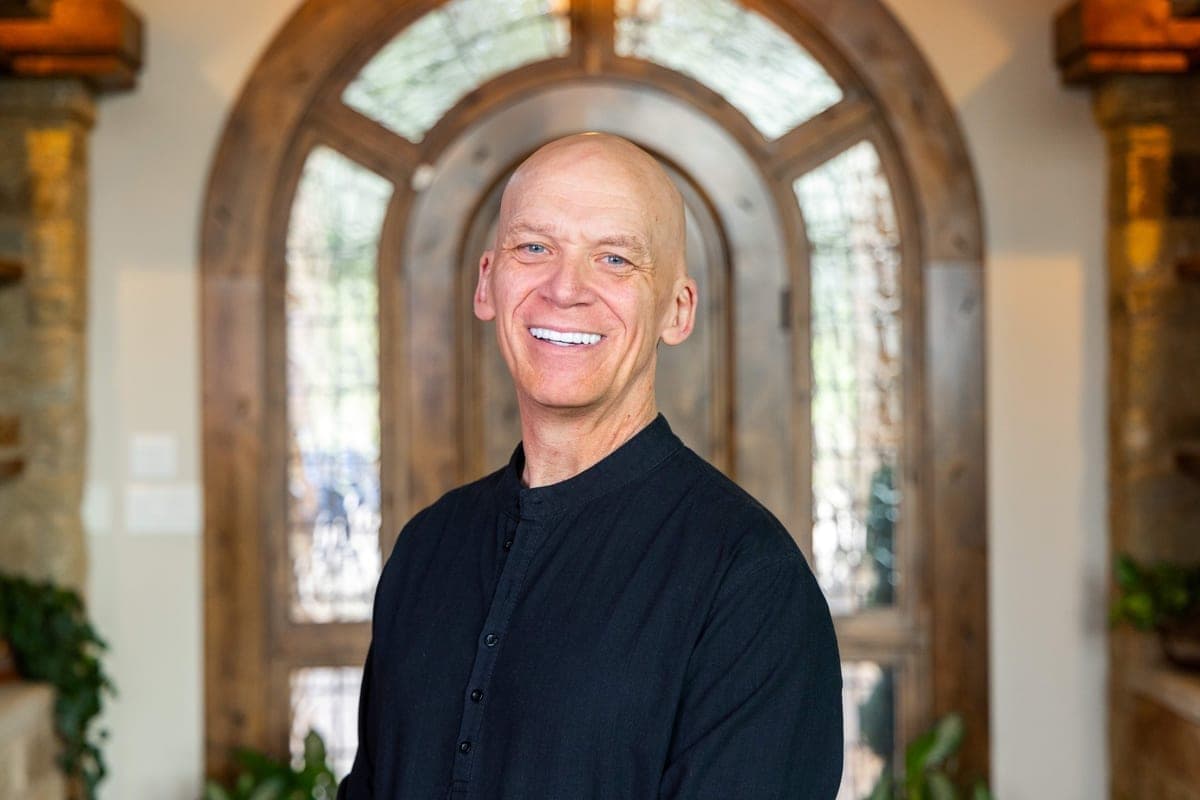
Dr. Dan Stickler, MD
Co-Founder & Chief Medical Officer
“We’re not treating disease. We’re designing optimal function. That’s a completely different orientation.”
That difference is genetic, and in this free certification-level lesson, you’ll learn how to read it, program for it, and stop treating every client like the same athlete.
Lesson 7.4: Exercise Genetics · 30–45 minutes · Full curriculum depth · Free
No credit card. Instant access on submission.
The pattern
You’ve programmed two clients identically and watched one gain muscle while the other barely changes. You’ve had injury-prone athletes who follow every load-management protocol, and still break down. You’ve seen VO₂ max improvements that don’t match the training volume.
The genetics
ACTN3 is associated with muscle-fiber composition and explosive-power potential. ACE influences cardiovascular efficiency and endurance adaptation. PPARGC1A governs mitochondrial biogenesis: how the body builds aerobic capacity in response to training. COL5A1 and COL1A1 are associated with connective-tissue injury risk. These variants are in your clients’ genetic reports right now.
Who it fits
This lesson is for performance coaches, strength coaches, athletic trainers, and physical therapists ready to program at the genetic level.
Lesson 7.4 from the Mosaic Epigenetics Coaching Certification: same content, depth, and standard as every lesson in the program.
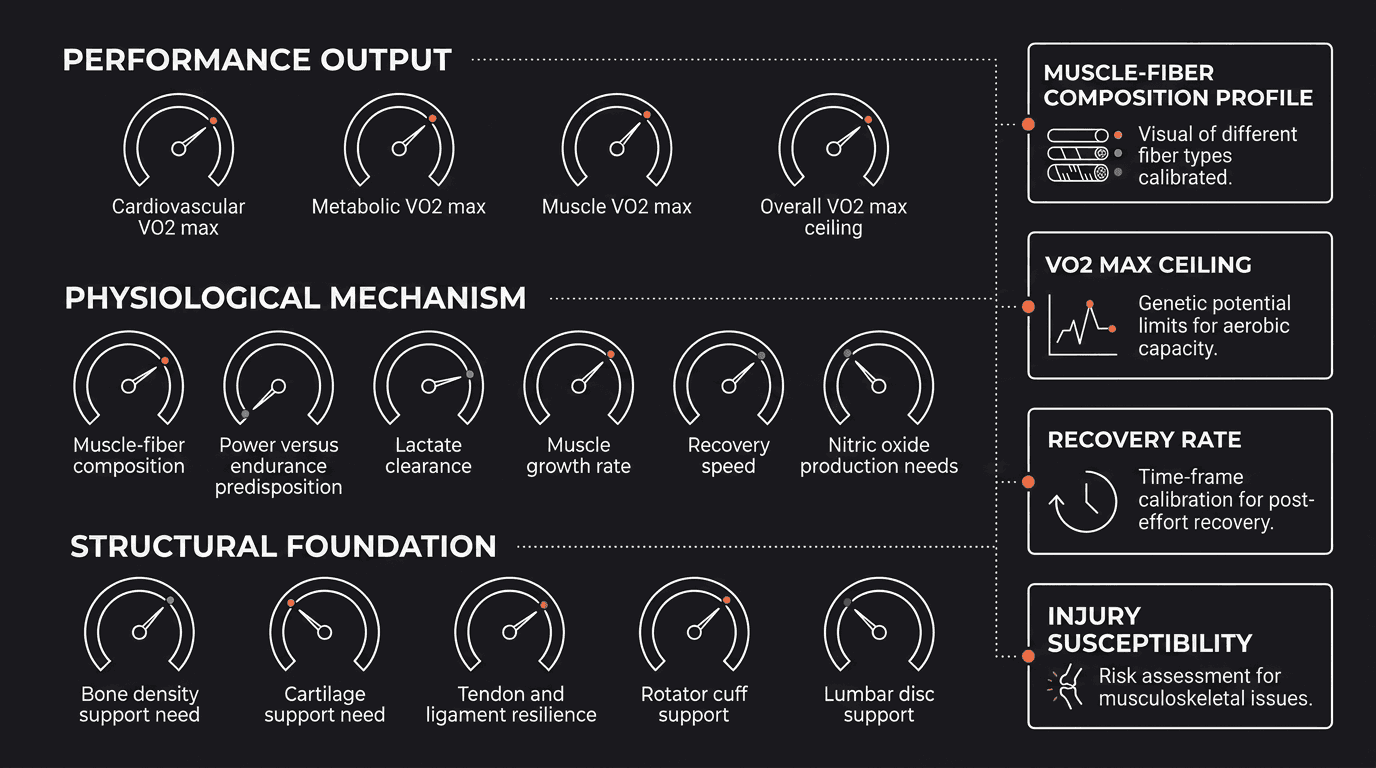
The variant that shapes fast-twitch vs. slow-twitch dominance, explosive power potential, and how a client responds to power-vs-endurance training.
How ACE variants shape blood-pressure response to training and endurance adaptation, with implications for programming.
The master regulator of mitochondrial production, and the gene most associated with how quickly aerobic capacity grows in response to training stress.
Connective-tissue variants associated with tendon and ligament resilience. Reading them changes how you load and recover an injury-prone client.
The variants that shape inflammation, oxidative stress clearance, and how long it takes a client to return to baseline after a hard session.
How to individualize training volume, intensity distribution, exercise selection, and recovery protocols based on a client’s specific exercise genetics.
Co-Founder & Chief Medical Officer
“We’re not treating disease. We’re designing optimal function. That’s a completely different orientation.”
Enter your name and email to get the full lesson: video preview, lesson handout, and an onboarding sequence introducing you to the rest of the curriculum.
Each one is a complete certification-level lesson from a different chapter.
The full certification is open for enrollment now.