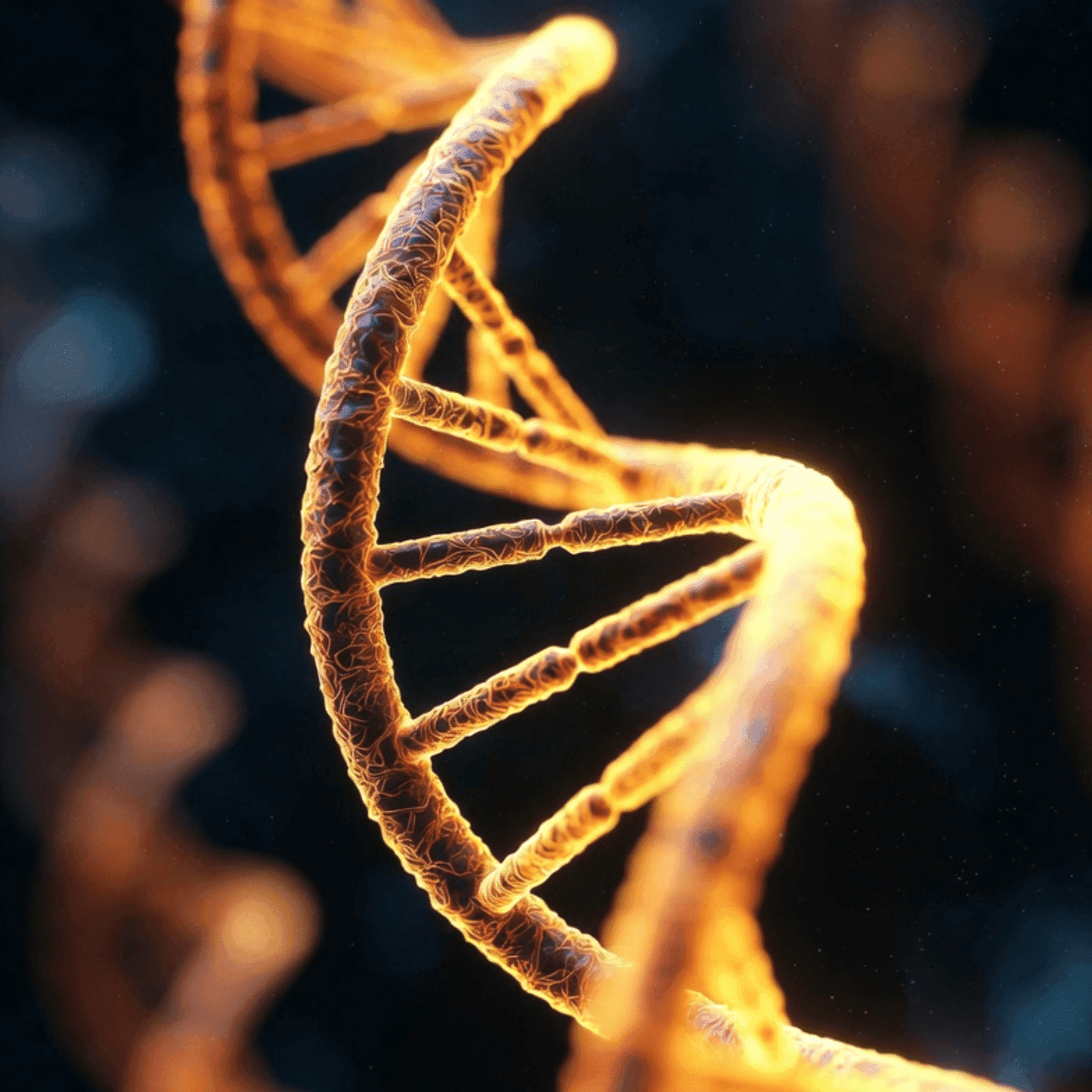
The same cheek swab. Wildly different amounts of DNA.
23andMe's health and trait reports run on a SNP chip that reads about 0.02% of your genome. Mosaic reads 100% of it at 30× clinical-grade depth. Here's what that actually means.
| Feature | Mosaic Biodata | 23andMe |
|---|---|---|
| How much of your DNA is read | 100% — whole-genome sequencing reads every chromosome, every gene, every variant. | ~0.02% — a SNP chip samples ~600K pre-selected positions out of 3B total. |
| Sequencing depth | 30× clinical-grade depth at a CLIA-, COLA-, CAP-, and AABB-accredited U.S. lab. | Single-pass SNP chip read; not depth-based. |
| Clinical interpretation | Built and refined across 10+ years of clinical practice at Apeiron Center. | Consumer-facing ancestry + traits; limited clinically-actionable depth. |
| Insights per report | 108 clinically-validated insights across 9 areas of your health. | Varies by tier; trait-and-ancestry oriented. |
| Practitioner-friendly | Designed to be defensible in clinical conversation. Practitioner-validated insights. | Not designed for clinical use; data export possible but limited. |
| Raw data ownership | Lifetime ownership. Download your raw genome at any time. | Raw SNP data available; whole-genome data is not generated. |
| Future re-analysis | Every future scientific breakthrough applies to data you already have. | Limited by the SNPs the chip captured at purchase time. |
| Subscription required | No. One-time purchase, no recurring charges, no upsells. | Premium subscription for the more interesting features. |
| Data privacy posture | HIPAA-compliant pipeline. We never sell, share, license, or monetize your genome. | Consumer privacy policy; opt-in research participation common. |
How much of your DNA is read
Mosaic Biodata
100% — whole-genome sequencing reads every chromosome, every gene, every variant.
23andMe
~0.02% — a SNP chip samples ~600K pre-selected positions out of 3B total.
Sequencing depth
Mosaic Biodata
30× clinical-grade depth at a CLIA-, COLA-, CAP-, and AABB-accredited U.S. lab.
23andMe
Single-pass SNP chip read; not depth-based.
Clinical interpretation
Mosaic Biodata
Built and refined across 10+ years of clinical practice at Apeiron Center.
23andMe
Consumer-facing ancestry + traits; limited clinically-actionable depth.
Insights per report
Mosaic Biodata
108 clinically-validated insights across 9 areas of your health.
23andMe
Varies by tier; trait-and-ancestry oriented.
Practitioner-friendly
Mosaic Biodata
Designed to be defensible in clinical conversation. Practitioner-validated insights.
23andMe
Not designed for clinical use; data export possible but limited.
Raw data ownership
Mosaic Biodata
Lifetime ownership. Download your raw genome at any time.
23andMe
Raw SNP data available; whole-genome data is not generated.
Future re-analysis
Mosaic Biodata
Every future scientific breakthrough applies to data you already have.
23andMe
Limited by the SNPs the chip captured at purchase time.
Subscription required
Mosaic Biodata
No. One-time purchase, no recurring charges, no upsells.
23andMe
Premium subscription for the more interesting features.
Data privacy posture
Mosaic Biodata
HIPAA-compliant pipeline. We never sell, share, license, or monetize your genome.
23andMe
Consumer privacy policy; opt-in research participation common.
A SNP chip is a thumbnail. Whole-genome sequencing is the full image.
A SNP-chip test like 23andMe pre-selects ~600,000 positions in your genome and reads those. It’s fast and cheap, and it’s perfect for ancestry estimates and well-known trait associations. It is not designed for clinical interpretation.
Whole-genome sequencing reads all 3 billion base pairs of your DNA, and reads them multiple times so variant calls are reliable. That depth is what makes the data defensible in a clinical conversation — and what lets the same raw file power new insights as the science evolves.
The technical version of this comparison is at whole-genome sequencing vs SNP arrays.
What this difference actually changes
What a Mosaic genome lets you do that a 23andMe genome can’t.
23andMe’s health and trait reports are the draw — but every one of them is built on the same ~600,000-position chip. Your Mosaic data covers every chromosome, including the variants that shape your caffeine clearance, your detox pathways, your sleep chronotype, your iron transport, your thyroid conversion. When you’re deciding whether a 3pm coffee is the reason your sleep is wrecked, the answer lives in positions a SNP chip never reads.